Engineering Salaries in Ireland 2026: What Your Skills Are Worth, Permanent or Contract
Engineering pay in Ireland 2026 at a glance
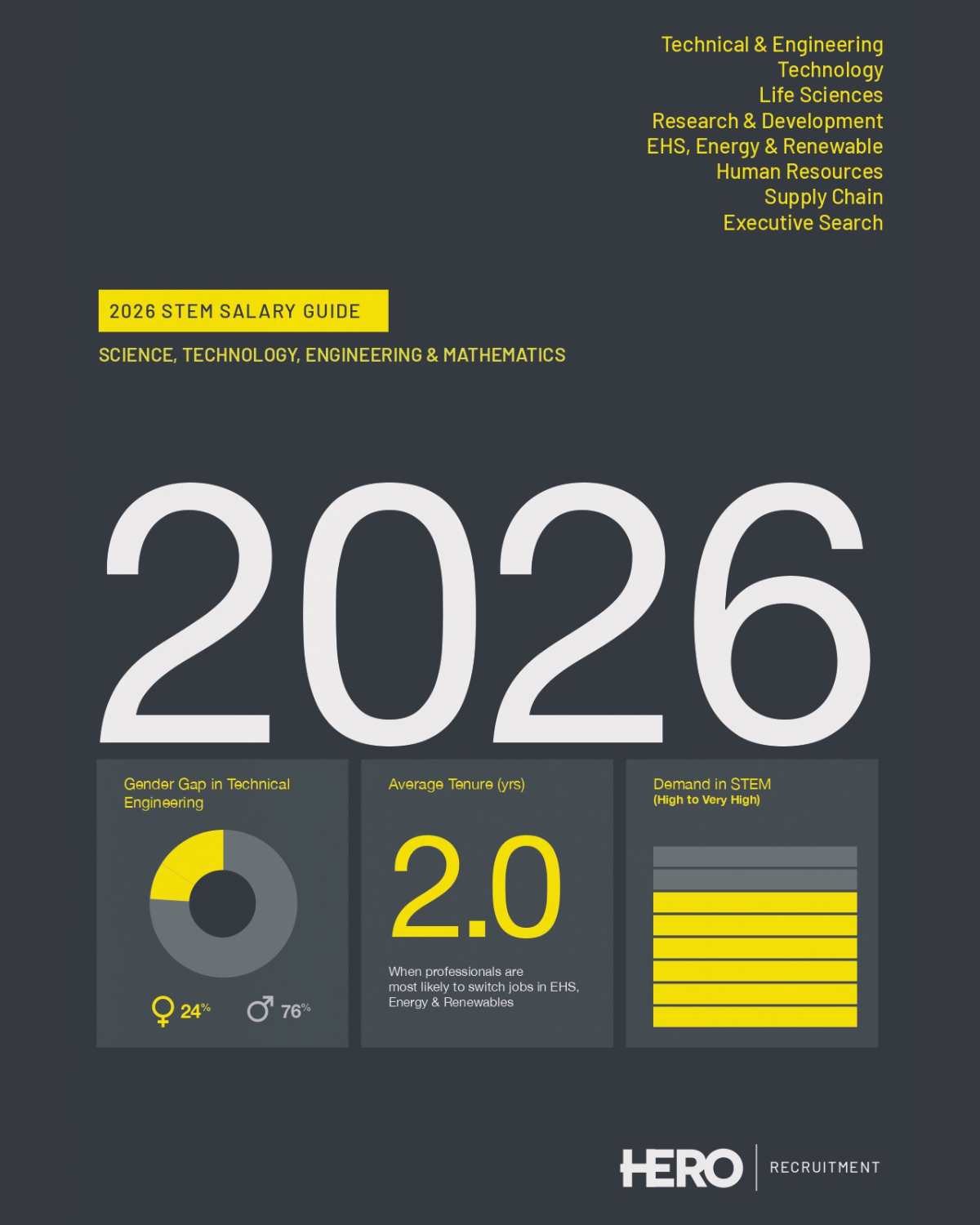
According to HERO Recruitment’s 2026 Engineering Salary Guide:
• €75,000 to €100,000: permanent base salary benchmark for Automation Engineers with more than five years’ experience.
• €479: average day rate for technical and engineering contractors in Ireland.
• 17 months: average length of an engineering contract.
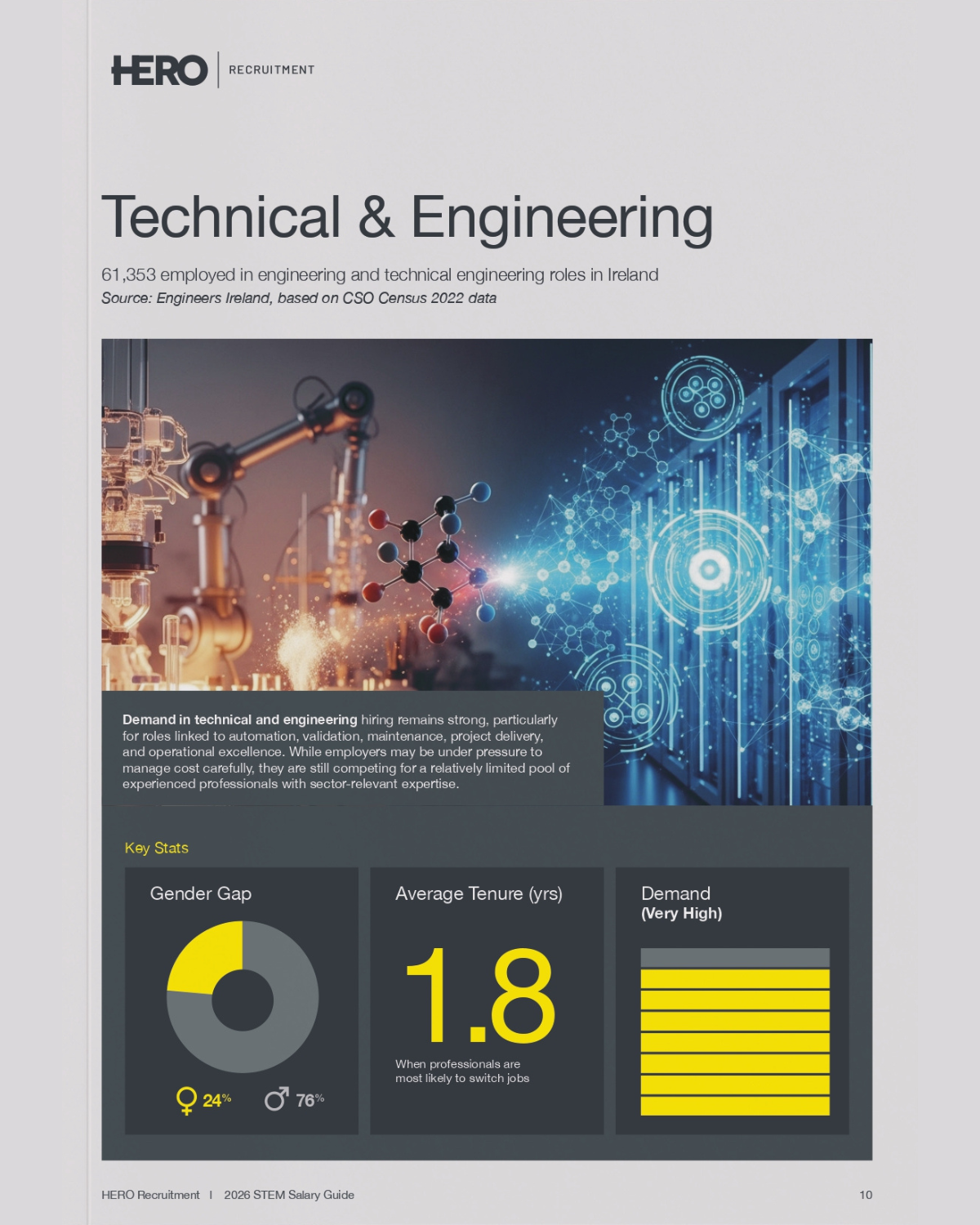
Demand is strongest for automation, validation, maintenance and project engineers with experience in regulated manufacturing, particularly medical devices and pharma.
“One of the biggest misconceptions I hear from engineers is that contracting means sacrificing job security. But that’s not necessarily the reality. Many contracts offer longer-term opportunities, competitive day rates and the chance to build valuable experience. It’s about understanding what’s actually on offer before ruling it out.”
Emma Griffin, Contracting Lead, HERO Recruitment
It’s a concern that comes up in Emma’s conversations with engineers every week. And it’s exactly why knowing your market value matters. From salary benchmarks to contractor day rates to the skills employers are paying for, understanding where you stand could open doors you hadn’t considered.
To go beyond our own data, we’ve drawn on The Tomorrow People, HERO’s podcast, where directors and executives from Zimmer Biomet, Aerogen, ProVerum, Chanelle Pharma and Apleona told us what they actually hire for, and when they bring in contractors.

How much do engineers earn in Ireland in 2026?
There isn’t one salary that fits every engineer in Ireland. Your discipline, your experience and the kind of problems you can solve all make a real difference. Automation Engineers with more than five years’ experience, for example, have a permanent base salary benchmark of €75,000 to €100,000.
That isn’t what every automation engineer will be offered. It’s a nationwide benchmark, and it excludes healthcare, pension and bonus. But it shows the value employers place on specialist, hands-on expertise.
The market is more selective than it was two years ago, but it hasn’t gone quiet. Darragh Spain, Managing Director of Apleona Ireland, described it this way:
“Employers are more cautious from a recruitment point of view. But in pharmaceutical, medical device, high-tech, the demand remains high. When the right candidate comes through, employers are still very committed to acquiring that person.”
Darragh Spain, Managing Director, Apleona Ireland, on The Tomorrow People
So what makes you the right candidate? Maybe you’ve spent years keeping a production line running, getting a complex system commissioned or working through a difficult validation project. Those are the details that matter when you compare your salary or day rate with the market, not just the job title on your CV.
What is the average engineering contractor day rate in Ireland?
The average technical and engineering contractor day rate in Ireland is €479. To put that in context: 220 billable days at €479 comes to roughly €105,000 a year, before tax.
That’s the eye-catching number. It isn’t the take-home number, and it doesn’t mean every engineer can expect €479 a day. Project scope, sector experience and location all play a part, and specialist work is where the rates are strongest. Tom O’Carroll, who leads Zimmer Biomet’s manufacturing operations in Ireland, named exactly where:
“Contracting is an important part of the Irish manufacturing scene, particularly where you need specialisation you don’t need every day: automation, validation, a major transformation programme.”
Tom O’Carroll, Director of Manufacturing, Zimmer Biomet, on The Tomorrow People
Before you chase the bigger number, ask what you’ll actually take home. Contractors don’t get paid leave or bank holidays, and time between assignments, pension, insurance and accountancy costs all change the calculation. Our contracting team will compare a day rate against a permanent package with you, line by line, so you can see the real difference.
How long do engineering contracts last in Ireland?
Longer than most engineers expect. The average engineering contract now runs for 17 months, which is a long way from the three-month stopgap many people picture. And the companies hiring contractors don’t see it as a stopgap either:
“Contracting is becoming more significant in the medical device industry, and not as a workaround or a cost-saving measure. For a lot of companies like ourselves, it’s a deliberate strategic choice.”
Gordon Crowley, Chief Operating Officer, ProVerum, on The Tomorrow People
Durations still vary. A commissioning project may look very different from a longer-term site improvement programme. So, what turns a good contract into an extension, or an invitation back? Aiden Dempsey, Chief Information Officer at Chanelle Pharma, was clear about what clients value most:
“That piece of leaving the knowledge behind, making sure we have continuity, that’s a key deliverable.”
Aiden Dempsey, Chief Information Officer, Chanelle Pharma, on The Tomorrow People
His colleague Martine Nolan described what happens when contractors get that right:
“A lot of people come back time and time again, and then they’re part of the organisation.”
Martine Nolan, Group Head of Quality Assurance, Regulatory Affairs and Pharmacovigilance, Chanelle Pharma
If you’re considering contracting, look beyond the day rate. Ask about the initial term, the project milestones, what you’ll learn and the realistic chances of extension.
PAYE, umbrella or limited company: which is right for engineering contractors?
How you structure your contract effects your take-home pay, your benefits and how much administration lands on you. Getting it right matters just as much as negotiating the rate. As Gordon Crowley put it:
“The professionals who get the most value out of contracting are the ones who treat it like a business. They come to us with a clear offering, a defined market, a defined proposition.”
Gordon Crowley, ProVerum
Here’s how the three main options compare:
|
Structure |
How it works |
What it means for you |
|
PAYE |
You’re paid through the recruitment agency’s payroll, with tax deducted at source. |
The simplest option, with the least administration. |
|
Umbrella company |
An umbrella company employs you, invoices the client and runs your payroll for a fee. |
Less admin than running your own company, at a cost. |
|
Limited company |
You invoice through your own company and decide how to draw your income. |
More control over costs and expenses, but more accounting and compliance to manage. |
The right arrangement depends on your circumstances, your employment status under Revenue’s rules and the contract itself. Compare the full financial picture, not just the advertised rate, and get independent tax advice before you decide. HERO will walk you through how each option works on a specific contract and introduce you to specialist contractor accountants who can manage the rest.
Which engineering roles are in demand in Ireland in 2026?
Automation, validation, maintenance and project engineering are seeing particularly strong demand, especially from engineers with specialist manufacturing experience.
Employers are competing for a relatively small pool of engineers who understand complex, regulated environments. Experience in PLC and SCADA systems, commissioning, pharmaceutical manufacturing or medical devices puts you in a stronger position, whether you’re looking at permanent roles or contracts.
What engineering skills make you more valuable to employers?
Technical depth is still the foundation. What’s changed is how far beyond your own discipline employers now expect you to see. Diarmuid Cullinan, who leads strategic manufacturing and process development at Aerogen, explained:
“The fundamentals remain the same. We still want the technical base, the curiosity, disciplined problem solving. But it’s not good enough to know your engineering space and just focus on that. You have to know how it integrates with the wider organisation: back into R&D, out onto the production floor, into the digital systems you’re connecting to.”
Diarmuid Cullinan, Associate Director of Strategic Manufacturing and Process Development, Aerogen, on The Tomorrow People
Then there’s AI. The good news for experienced engineers is that it rewards expertise rather than replacing it. Chanelle Pharma tested this in its own pilots:
“Where we had a knowledgeable person driving the model, we got great results. Where we didn’t know the subject matter that well, it was very, very patchy.”
Aiden Dempsey, Chief Information Officer, Chanelle Pharma
Or, as Tom O’Carroll at Zimmer Biomet put it:
“AI can make an average engineer good, but it can also make a good engineer great.”
Tom O’Carroll, Director of Manufacturing, Zimmer Biomet
You don’t need to become an AI expert. If you’re a maintenance engineer, building your PLC and automation skills could open up new opportunities. If you work in validation, understanding digital systems and knowing how to check AI-generated outputs will make your experience more valuable, not less. Robotics, digital twins and industrial data analytics are all worth watching as manufacturing evolves.
It’s not about learning every new technology. It’s about building on the experience you already have and knowing which skills will take your career further.
So, what’s your next career move?
Whether you’re considering a salary review, exploring contracting or looking for your next engineering role, understanding your market value is a good place to start.
Look beyond your job title. The projects you’ve delivered, the problems you’ve solved and the specialist skills you’ve built all tell the story of what you bring. And when you compare opportunities, compare the full package, not just the salary or the day rate.
You don’t need to rush into a career change to make progress. Lateral moves often bring the best opportunities and experience. Sometimes, simply knowing what your experience is worth gives you the confidence to have the right conversations.
Want the full figures before your next move? Download HERO’s 2026 Engineering Salary Guide for salary benchmarks by discipline and experience. Or talk to Emma’s team about what your skills are worth on contract.
FAQs



Search Jobs
Match my CV
We take the hard work out of finding you a new job. Simply upload your CV (or call us) and we’ll get hunting for you!
Subscribe to The Shift for the latest STEM industry and career updates.

Join The Shift!
Get insider updates on the hottest industry trends, cutting-edge career advice, and exclusive talent insights. Stay ahead of the curve and keep your finger on the pulse of Ireland’s STEM talent trends. Exciting content coming your way soon!