Pay Transparency in Ireland: What Employers and Contractors Need to Know
As of July 2026, Ireland has not fully transposed the EU Pay Transparency Directive into national law. The 7 June 2026 deadline has passed, and the Government has indicated that implementation will take place in phases. Employers should still begin preparing salary ranges, objective pay criteria, gender-neutral job descriptions and recruitment processes that do not rely on candidates’ salary histories.
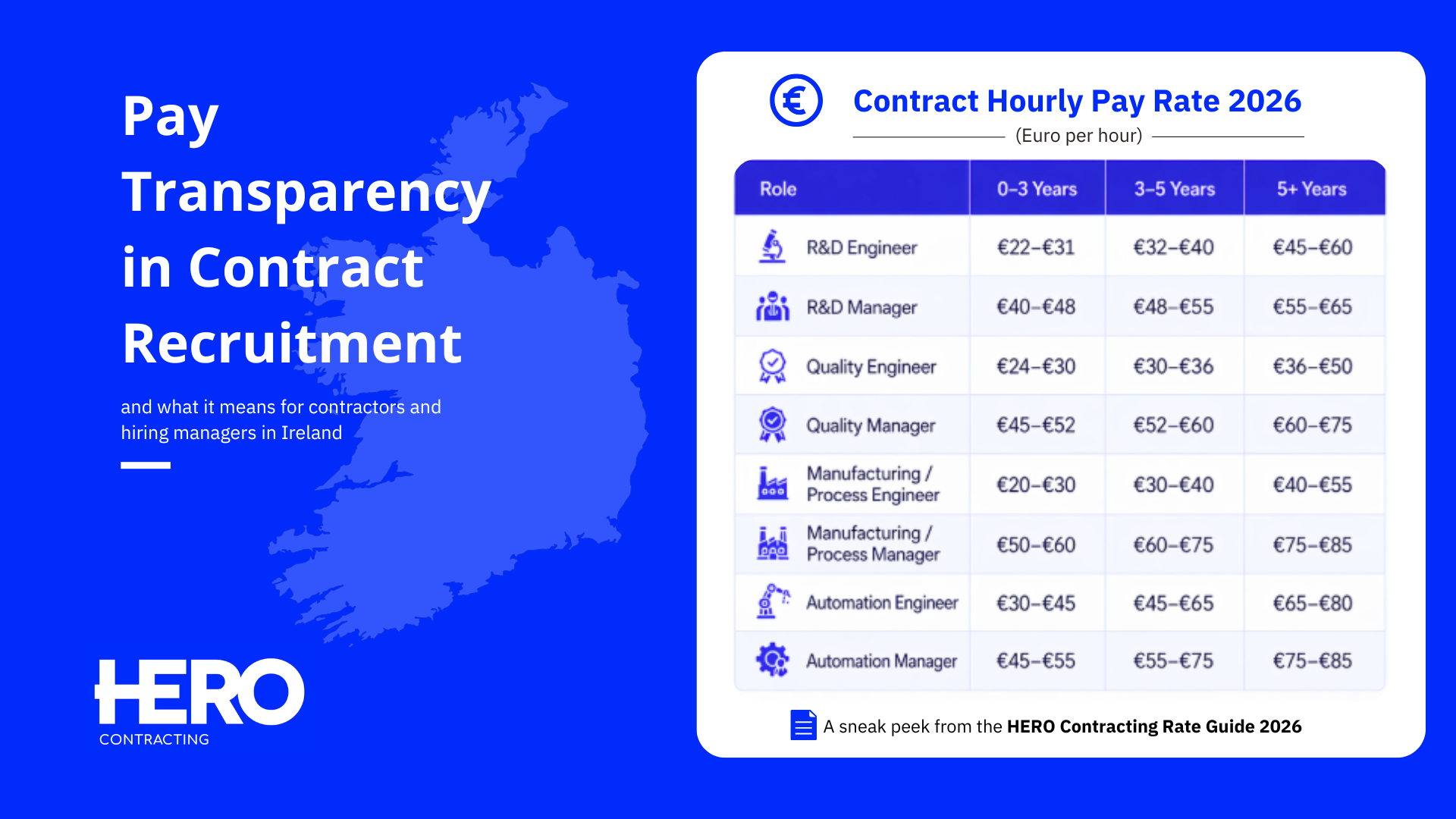
Pay transparency is changing how organisations advertise roles, structure salaries and discuss pay with candidates and employees.
However, the legal position in Ireland requires careful explanation. As of 30 July 2026, Ireland has not fully transposed the EU Pay Transparency Directive into national law. The 7 June 2026 deadline has passed, and the Government has confirmed that implementation will take place on a phased basis. Existing Irish equal-pay and gender-pay-gap reporting rules continue to apply.
Employers should not wait for the final Irish legislation before reviewing their recruitment and pay practices. Salary ranges, pay-setting criteria, job architecture and contractor-rate definitions can take months to standardise, particularly in organisations with multiple sites, business units or legacy pay arrangements.
What Is the Current Status of Pay Transparency in Ireland?
The EU Pay Transparency Directive was adopted to strengthen the principle of equal pay for equal work or work of equal value. EU Member States were required to transpose it into national law by 7 June 2026. Ireland did not meet that deadline.
The Irish Government has stated that implementation will be phased and that employers will not be penalised simply because every element of the Directive was not completed by June 2026. Complete Irish legislation, commencement dates and detailed enforcement arrangements are still required.
This means employers should distinguish between three things:
- Irish employment and equality laws that already apply.
- Obligations established by the EU Directive but not yet fully transposed in Ireland.
- Proposed Irish measures that may change before final legislation is enacted.
The absence of complete Irish legislation does not make pay transparency irrelevant. It gives employers a limited preparation window.
What Will the EU Pay Transparency Directive Change?
When fully implemented, the Directive will affect recruitment, salary discussions, employee information rights, pay structures and gender-pay reporting.
Salary Information During Recruitment
Applicants will have the right to receive information about the initial salary or pay range for a position. The range must be based on objective, gender-neutral criteria and provided early enough to support an informed pay negotiation.
The Directive allows this information to be supplied in the vacancy notice, before the interview or through another suitable method before an employment contract is concluded. Draft Irish proposals have indicated that Ireland may go further by requiring salary information directly in the job advertisement, but the final Irish legislation will determine the precise requirement.
A credible salary range should reflect the genuine hiring budget. Employers should be able to explain what would place a candidate at the lower, middle or upper end of the range.
Terms such as “competitive salary” or “market rate” will become increasingly difficult to defend when candidates expect clear figures and objective placement criteria.
Check out: Contractor Rates in Ireland 2026
Salary-History Questions
The Directive prohibits employers from asking applicants about their current or previous pay.
Using salary history can preserve existing inequalities by making a candidate’s next salary dependent on what a previous employer paid rather than the value of the new role.
Employers should remove salary-history questions from:
- Application forms.
- Screening calls.
- Interview templates.
- Recruitment-agency briefing documents.
- Applicant-tracking systems.
- Offer-approval processes.
Recruiters can still ask candidates about their salary expectations, provided the question is not used as an indirect way to obtain previous-pay information.
Employee Rights to Pay Information
Under the Directive, workers will be able to request information about:
- Their individual pay level.
- Average pay levels, separated by sex, for workers performing the same work or work of equal value.
- The criteria used to determine pay.
- The criteria used to determine pay progression.
Employers will generally have to supply requested information within two months and inform workers annually about their right to request it. The final Irish legislation will determine how these rights are exercised and enforced nationally.
The right does not mean employees will automatically receive the names and exact salaries of individual colleagues. Information must be managed in a way that protects personal data while allowing meaningful pay comparisons.
Also Check out: Ireland's STEM Job Market
Transparent Pay and Progression Criteria
Employers will need objective, gender-neutral criteria for determining pay, pay levels and career progression.
A manager saying that one employee is paid more because they are “a stronger performer” will not be sufficient unless the organisation can show what performance means, how it is measured and whether the same standard is applied consistently.
Gender-Pay Reporting and Joint Pay Assessments
The Directive introduces reporting obligations according to employer size.
| Employer size | Directive reporting timetable |
|---|---|
| 250 or more workers | By 7 June 2027 and annually thereafter |
| 150–249 workers | By 7 June 2027 and every three years thereafter |
| 100–149 workers | By 7 June 2031 and every three years thereafter |
| Fewer than 100 workers | Member States may introduce national reporting requirements |
These are the Directive’s minimum reporting dates. Ireland’s final legislation could introduce additional or more frequent obligations.
A joint pay assessment may be required where reporting identifies an average pay difference of at least 5% within a category of workers, the difference cannot be justified using objective gender-neutral criteria and it has not been corrected within six months.
Do Job Advertisements Need to Include Salary Ranges in Ireland?
As of 30 July 2026, there is not yet a complete, generally operative Irish pay-transparency law requiring every job advertisement to display a salary range.
The EU Directive requires candidates to receive the initial salary or salary range early enough to support an informed negotiation. It does not require every Member State to use precisely the same disclosure method.
Ireland’s draft proposals have indicated that salary information may be required directly in the job advertisement. Until final legislation is enacted, employers should not describe that proposal as settled Irish law.
Publishing a meaningful range now is still sensible because it can:
- Reduce applications from candidates whose expectations cannot be met.
- Prevent time being wasted during screening and interviews.
- Improve candidate trust.
- Encourage managers to agree the budget before recruitment begins.
- Reduce inconsistent salary negotiations.
- Support fairer offer decisions.
A useful range should not be so broad that it becomes meaningless. An advertisement offering “€40,000–€100,000 depending on experience” is unlikely to provide genuine transparency unless the position can legitimately be filled at several substantially different levels.
Does Pay Transparency Apply to Contractors?
The answer depends on the legal structure of the engagement.
The Directive applies to people who have an employment contract or employment relationship as defined under national law. Its intended scope includes part-time workers, fixed-term workers and people employed through temporary-work agencies.
Independent Contractors
A genuinely self-employed contractor operating through a limited company is not automatically treated as an employee simply because the assignment is described as a contract role.
The relevant questions include:
- Who controls how the work is performed?
- Is the contractor operating an independent business?
- Who carries the commercial risk?
- Can the contractor provide a substitute?
- How integrated is the person into the client’s organisation?
- What does the contractual and practical working relationship show?
The final Irish legislation and the person’s actual employment status—not the label placed on the contract—will determine whether employment-related pay-transparency rights apply.
PAYE and Umbrella Contractors
A contractor employed through PAYE or an umbrella company may have an employment relationship with the payroll provider, agency or another organisation.
That structure could bring the person within employment-related protections even where the assignment is temporary. The responsible employer and applicable rights will depend on the contractual arrangement.
Temporary Agency Workers
Temporary agency workers are specifically contemplated within the Directive where they have an employment contract or employment relationship with the agency. Existing Irish legislation also provides agency workers with protections relating to basic working and employment conditions.
Employers and agencies should therefore avoid treating all contractors as a single legal category.
Check out: Contracting Jobs Ireland
What Contractor Rate Information Should Be Disclosed?
Contract pay is often more complicated than permanent salary because several different figures may exist within the same engagement.
A transparent contract opportunity should identify:
- The candidate’s gross hourly or daily rate.
- Whether the engagement is PAYE, umbrella or limited company.
- The number of hours used to calculate a standard day.
- Whether VAT is included or excluded.
- Whether expenses and travel are included.
- Overtime, on-call or shift arrangements.
- The payment frequency.
- The expected contract duration.
- Any holiday-pay treatment.
- Whether the published figure is candidate pay or the total client charge.
A candidate pay rate and a client charge rate are not the same figure. The client charge may include employer costs, statutory obligations, insurance, payroll administration, compliance services and the recruitment provider’s commercial margin.
Pay transparency does not create a general requirement for a recruitment agency to disclose its complete commercial margin to every applicant. It does require clarity about the remuneration being offered to the person performing the work.
Publishing a rate without defining what it represents creates the appearance of transparency rather than real transparency.
How HERO Supports Transparent STEM Recruitment
HERO supports employers recruiting permanent and contract professionals across Ireland’s STEM sectors.
Transparent recruitment begins with evidence. Employers need realistic salary or rate benchmarks, clearly defined roles and a recruitment process that communicates the opportunity accurately.
HERO can support organisations with:
- Permanent salary benchmarking.
- Contractor-rate benchmarking.
- Role and job-description reviews.
- Candidate-market feedback.
- Permanent and contract recruitment.
- Contractor engagement and payroll support.
- Clear communication of salary and contract structures.
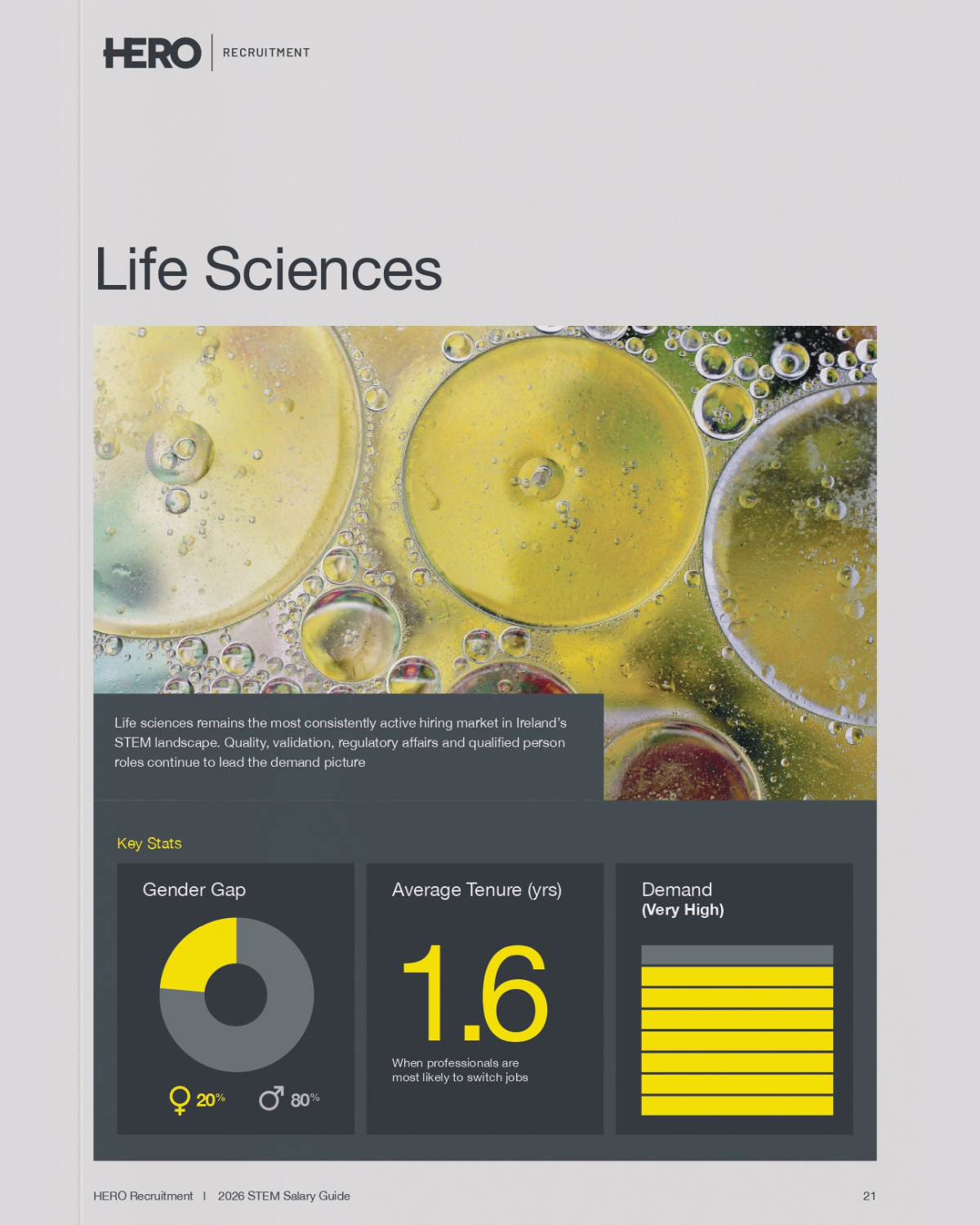
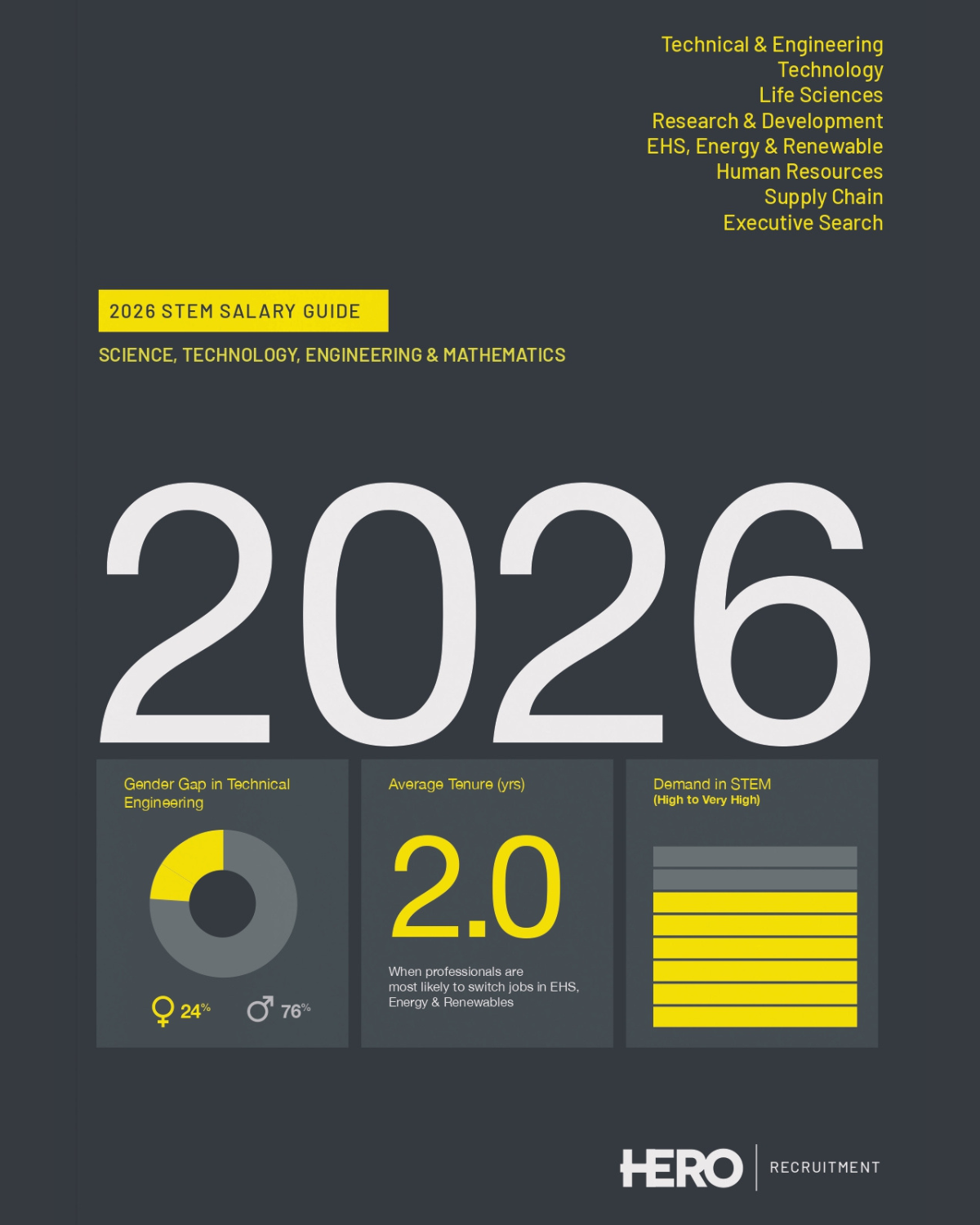
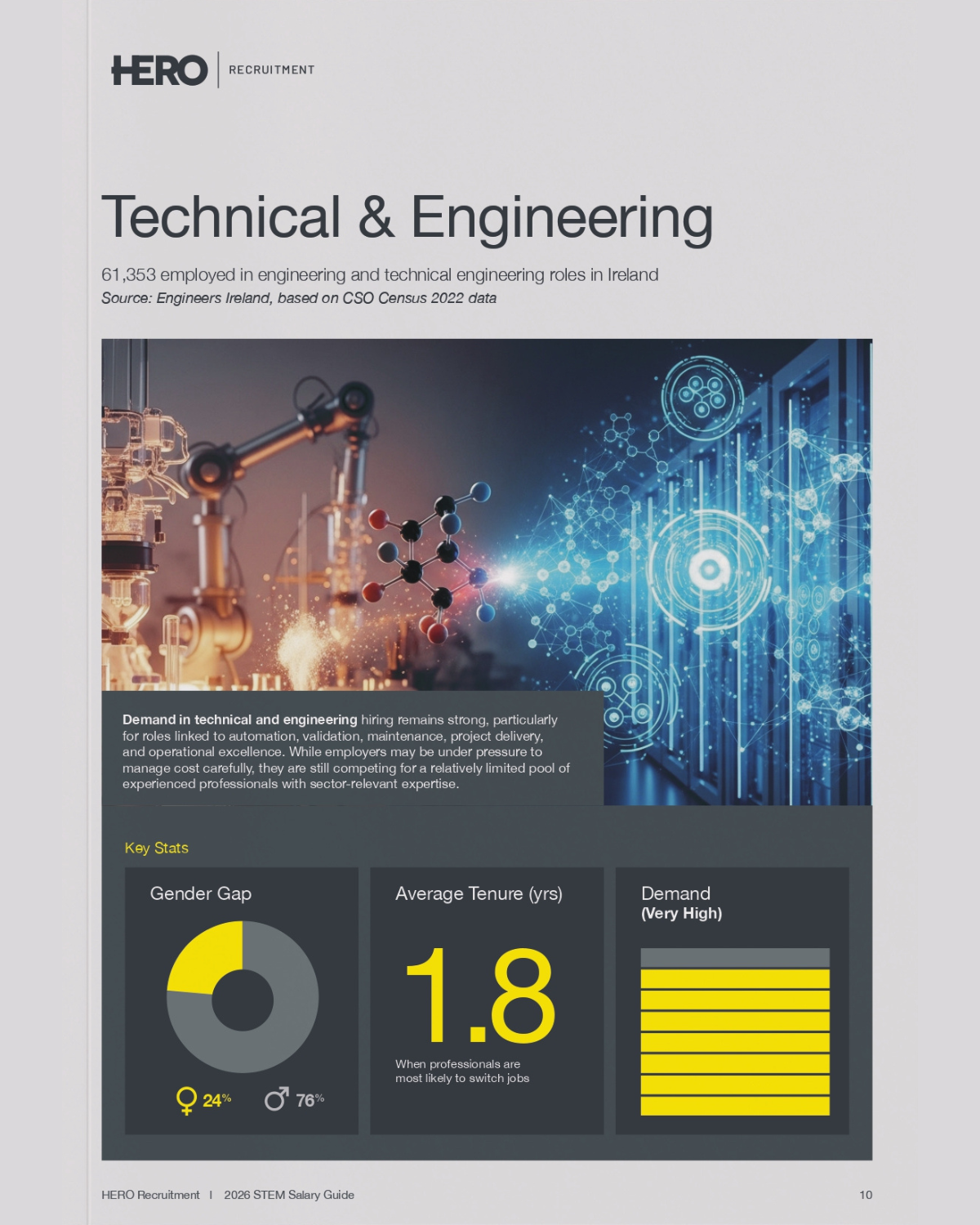
Candidates and contractors can also use HERO’s permanent salary and contracting-rate guides to compare opportunities across engineering, technology, quality, R&D, regulatory affairs, life sciences and other specialist disciplines.
This article provides general recruitment information and does not constitute legal advice. Employers, contractors and workers should obtain advice based on their circumstances and the final Irish legislation.
FAQs







Search Jobs
Match my CV
We take the hard work out of finding you a new job. Simply upload your CV (or call us) and we’ll get hunting for you!
Subscribe to The Shift for the latest STEM industry and career updates.

Join The Shift!
Get insider updates on the hottest industry trends, cutting-edge career advice, and exclusive talent insights. Stay ahead of the curve and keep your finger on the pulse of Ireland’s STEM talent trends. Exciting content coming your way soon!