Dublin Job Market 2026: Where the High-Demand Opportunities Are
Dublin remains one of Ireland’s most important employment centres for technology, engineering, life sciences, financial services and specialist professional roles. But the market in 2026 is more selective than the hiring environment candidates experienced during some of the rapid-growth years earlier in the decade. The national labour market provides useful context. Ireland’s seasonally adjusted unemployment rate was 5.1% in July 2026, compared with 5.0% in June, while employment remained close to 2.8 million people in early 2026. The figures point to a labour market that remains relatively strong but is no longer tightening at the same pace across every occupation. CSO, 2026

Is Dublin’s Job Market Strong in 2026?
Dublin continues to benefit from Ireland’s wider position as a base for multinational technology, life-sciences and financial-services organisations, alongside a growing group of Irish technology and specialist-services businesses.
IDA Ireland secured 190 investments in the first half of 2026, associated with commitments for more than 10,400 jobs nationally. Technology, life sciences, industrial engineering and financial services featured prominently, with AI, advanced R&D and digital infrastructure among the areas attracting investment. However, candidates should not interpret investment announcements as evidence that every occupation is experiencing a shortage.
Ireland’s overall unemployment rate increased to 5.1% in July 2026, and the national job-vacancy rate was 1.1% at the end of Q1 2026, down from 1.3% one year earlier. The market therefore requires a more nuanced description than simply saying Dublin is “booming”. For experienced professionals with specialist expertise, there are still clear opportunities. For candidates with more general experience, the search can take longer and employers may apply tighter requirements.
Technology and AI Continue to Create Dublin Opportunities
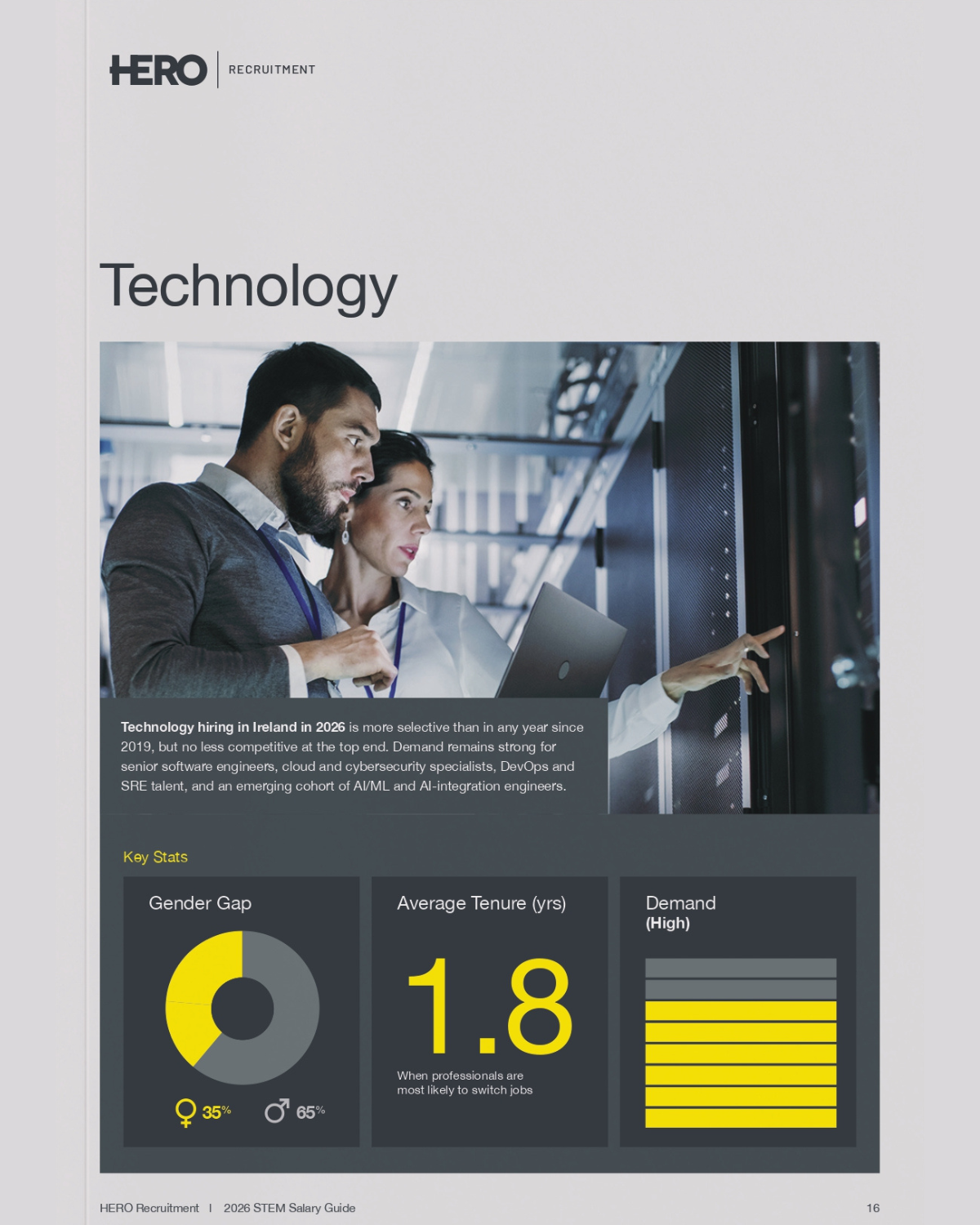
Technology remains one of Dublin’s most visible employment sectors. IDA Ireland reports that more than 106,000 people work in Ireland’s ICT industry, with activity spanning software development, cloud services, cybersecurity, analytics, R&D and international operations. Dublin remains particularly important for European headquarters, engineering teams and product-development functions.
Recent Dublin investment announcements also show where technology hiring is moving. In July 2026, OpenAI announced a new EU headquarters in Dublin and plans for 250 additional roles over two years across engineering, go-to-market functions, user operations, finance, HR, privacy, legal and other areas. The company is due to move into its new Dublin Docklands headquarters later in 2026.
Klaviyo announced an engineering investment in Dublin in April 2026, with plans to grow its Irish workforce by up to 50% during the year after creating more than 100 roles in the preceding 12 months. Rippling has also announced 150 additional Dublin positions, while NTT DATA said in June 2026 that it planned to recruit another 50 people after adding 100 Irish jobs since January 2025.
Enterprise Ireland has also supported expansion among Irish technology businesses. Dublin-based Origina announced 350 high-value roles in January 2026 as part of its international expansion.
Which IT skills are most relevant?
HERO’s recruitment data indicates that demand in 2026 is increasingly concentrated around specialist technology capability rather than general IT experience. Software engineering remains important, but employers are also looking closely at cloud architecture, DevOps and SRE, cybersecurity, data engineering, artificial intelligence, technical architecture and the ability to integrate AI-enabled systems securely into existing organisations. HERO’s IT Salary Guide Ireland 2026 reflects that shift, with stronger salary potential generally concentrated around specialist and senior positions.
Candidates considering a technology career change can also read HERO’s guide to Ireland’s IT ecosystem, high-demand skills and upskilling pathways.
Engineering Opportunities in Dublin
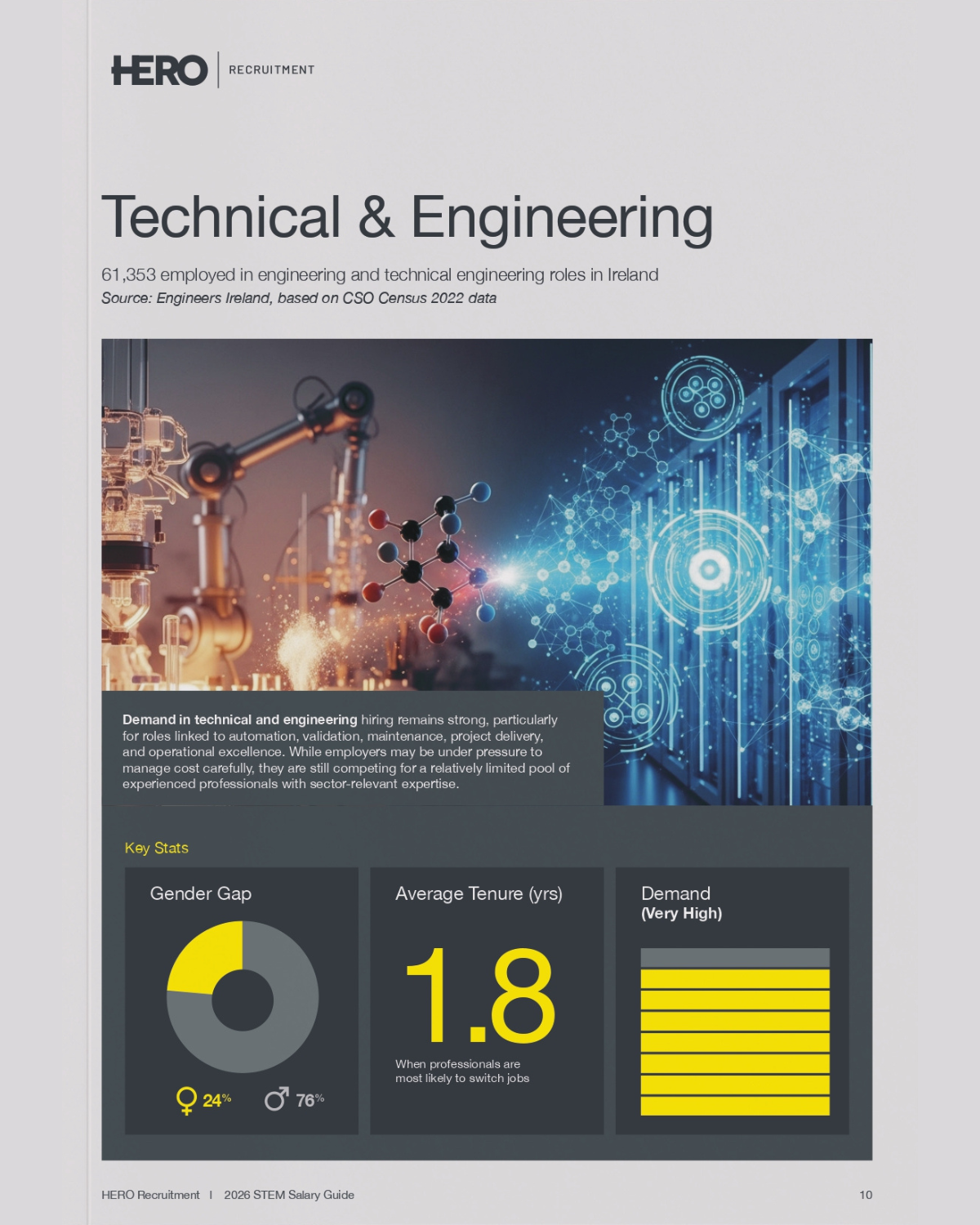
Dublin’s engineering market extends well beyond traditional construction or mechanical design. Engineers work across pharmaceutical and biopharmaceutical manufacturing, medical technology, advanced manufacturing, automation, utilities, process development, R&D and large capital projects.
IDA Ireland reports more than 250 industrial technology and engineering companies employing over 23,000 people nationally. Ireland’s current Critical Skills Occupations List also includes mechanical engineers, electrical engineers and several specialist electronics, automation, design, development, production and process-engineering occupations. For Dublin candidates, relevant opportunities can include manufacturing engineering, automation and controls, process engineering, project engineering, utilities, validation, equipment engineering and technical project management.
R&D and Product Development
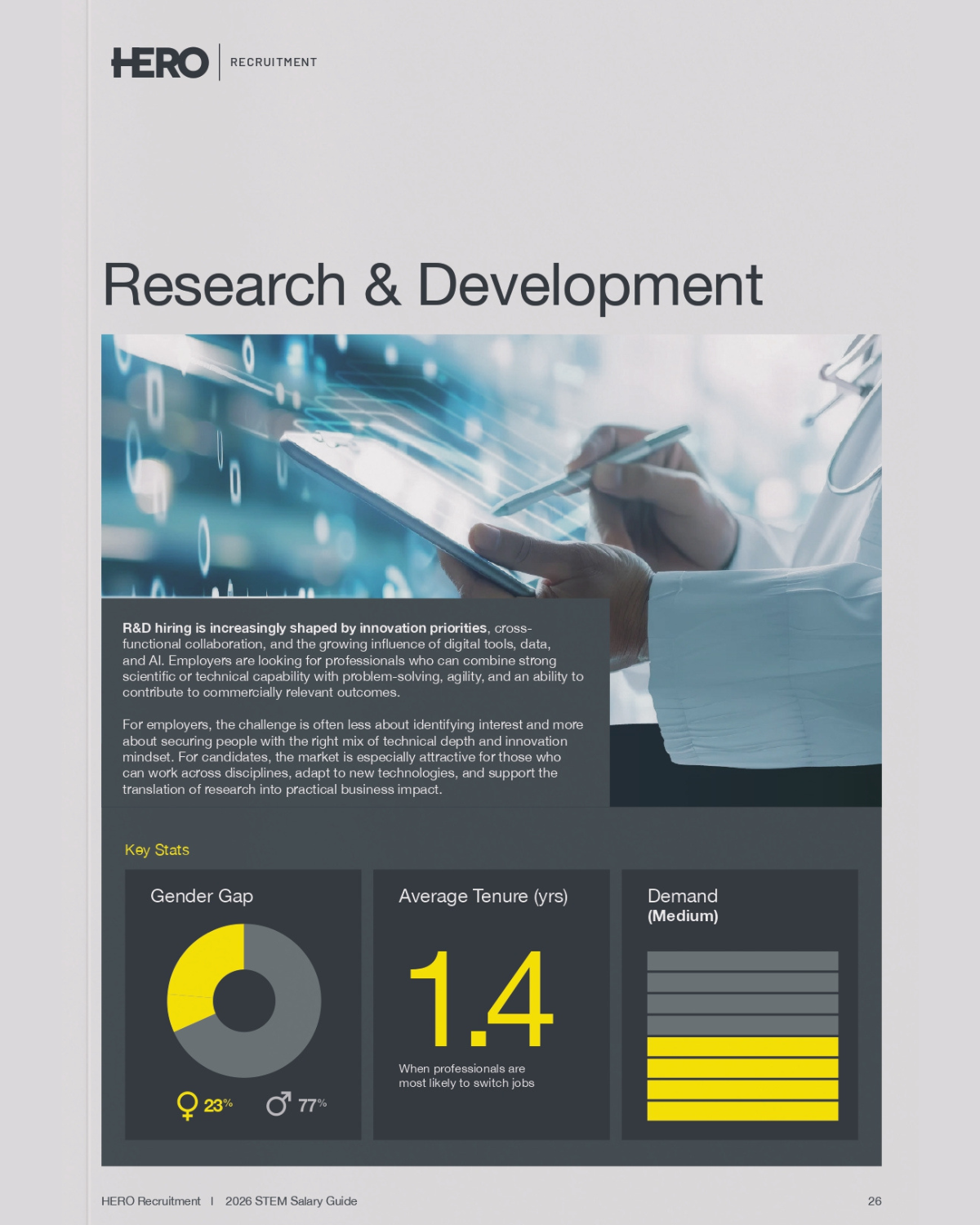
Dublin also supports careers that sit between engineering, scientific development and commercialisation.
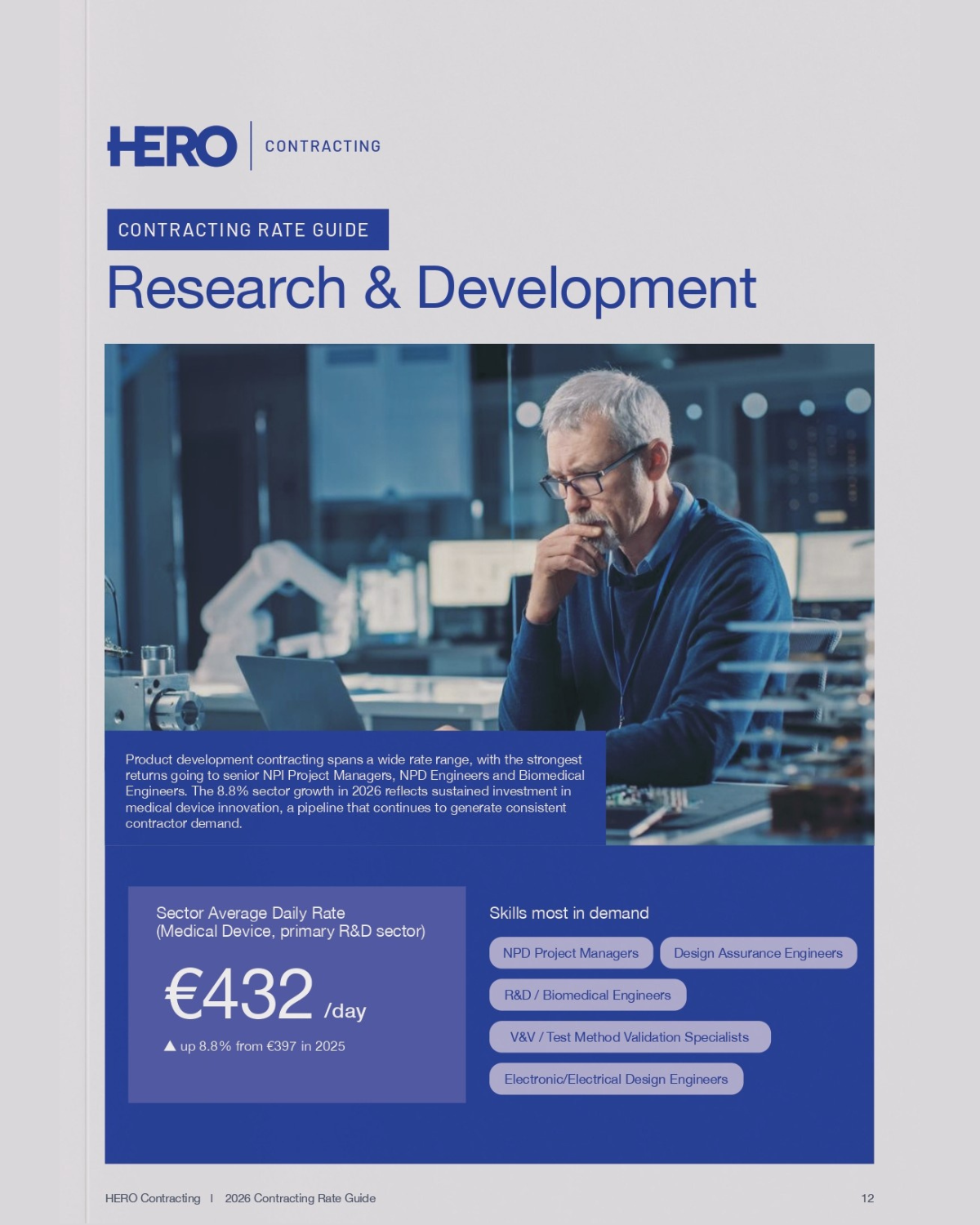
R&D engineers may work on new products, processes, equipment, manufacturing technologies or technical platforms. Depending on the organisation, that can involve product development, testing, verification, process development, NPI, design controls and transfer into commercial manufacturing. Candidates considering R&D should avoid focusing solely on job title. Employers may advertise closely related work as product development, process development, NPI, design engineering, research engineering or technical project management.
Life Sciences Remains a Major Dublin Career Market
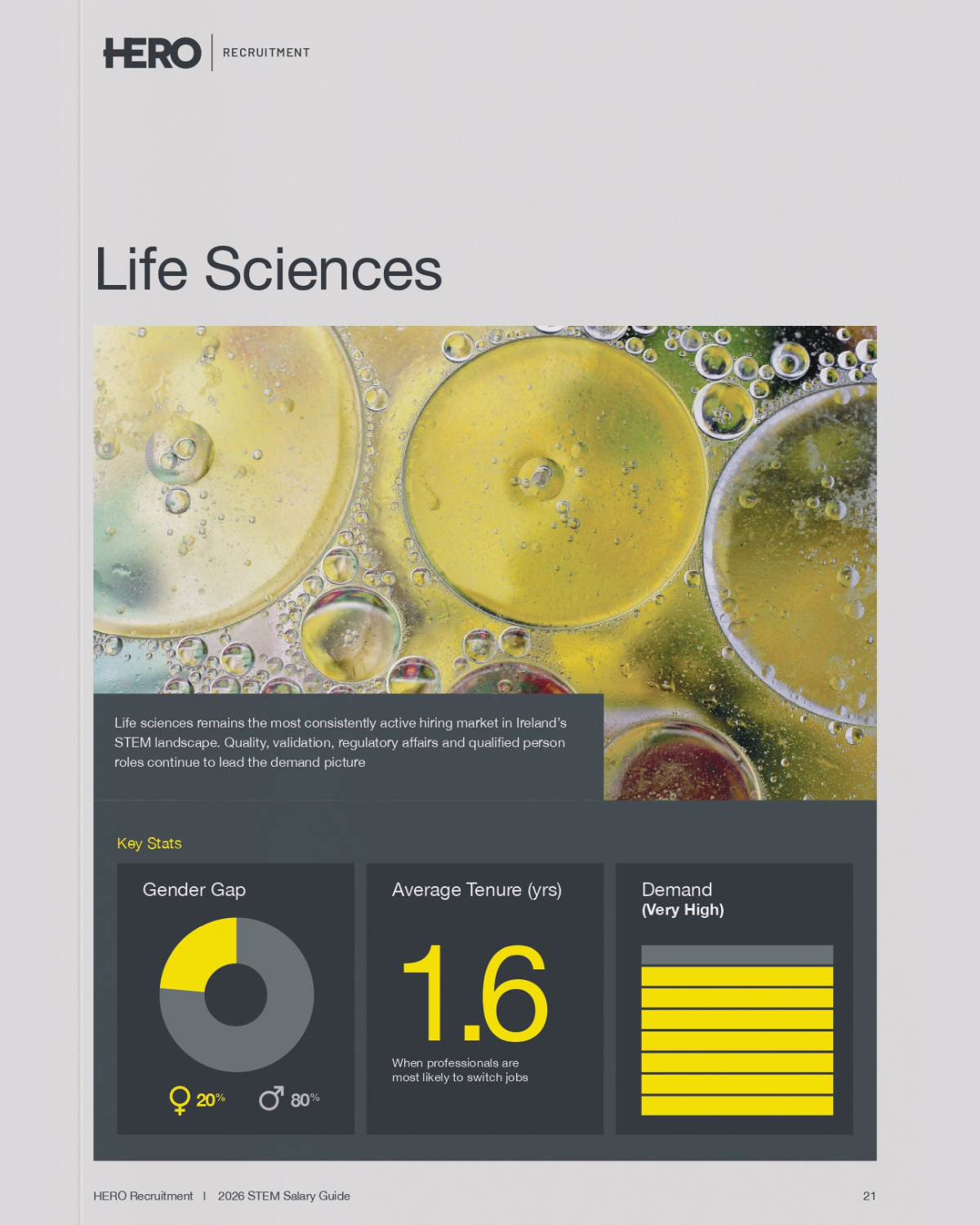
Life sciences continues to be one of Ireland’s most important sources of specialist employment.
IDA Ireland reports more than 90 pharmaceutical companies operating nationally and approximately 45,000 people employed by IDA client companies in pharmaceutical activities. Dublin is home to operations from companies across pharmaceuticals, biopharma, advanced therapeutics and related healthcare technologies. The range of jobs extends far beyond scientists working in laboratories.
Life-sciences organisations recruit engineers, automation specialists, quality professionals, validation engineers, regulatory specialists, clinical professionals, project managers, data professionals, supply-chain specialists and manufacturing leaders. A recent example of continuing investment is West Pharmaceutical Services’ expanded facility in Damastown, Dublin 15. At its March 2026 opening, IDA Ireland reported that the expansion had created 330 highly skilled jobs supporting injectable therapies and drug-delivery products.
Dublin also supports pharmaceutical manufacturing and R&D operations from companies including Pfizer, AstraZeneca and other established life-sciences employers. IDA identifies Dublin as one of Ireland’s significant pharmaceutical locations. The broader lesson for candidates is that “life sciences” is not one job market. An automation engineer, regulatory-affairs specialist, scientist and quality manager may work for the same company but face completely different hiring conditions.
Quality, Validation and Regulatory Affairs
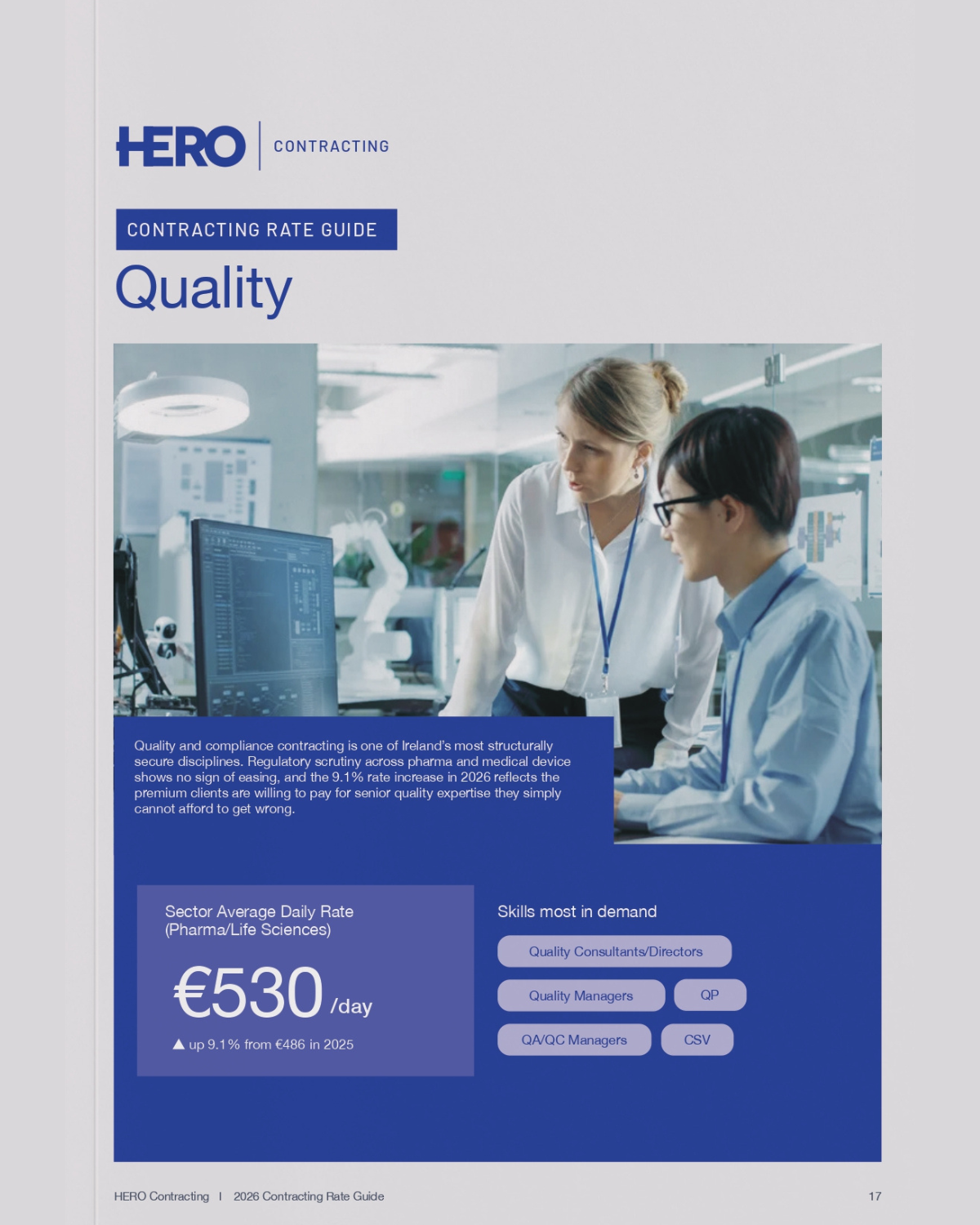
Quality and validation remain important across Dublin’s regulated manufacturing environment. Employers require people who can demonstrate that processes, systems, equipment and products operate within defined requirements. Depending on the role, this can involve quality systems, CAPA, auditing, equipment qualification, process validation, computer-system validation, design assurance or regulatory documentation.
The experience requirement can be particularly important here. Someone with general quality experience may not automatically match a medical-device, pharmaceutical or biologics position if the employer needs knowledge of a particular regulated environment. Candidates should therefore make the relevant standards, systems, validation work and product exposure visible on their CV.
For regulatory professionals, HERO’s Regulatory Affairs Contracting Rate Guide Ireland 2026 provides current benchmarks for specialist and leadership roles.
Salaries in Dublin: Compare the Role, Not Just the Location
Dublin salaries can vary substantially according to discipline, experience and level of responsibility.
For example, HERO’s IT Salary Guide Ireland 2026 benchmarks permanent Full Stack Engineers at approximately €45,000–€85,000 across its experience bands, while DevOps/SRE Engineers range from approximately €40,000 to €100,000. Technical Architects range from approximately €65,000 to €100,000. These are national role benchmarks rather than guaranteed Dublin salaries.
HERO’s Permanent Salary Guide Ireland 2026 provides wider benchmarks across engineering, R&D, IT, EHS, HR and other STEM functions. Manufacturing Engineers, for example, are benchmarked between approximately €40,000 and €75,000 across the guide’s experience ranges, while experienced Engineering Managers can reach substantially higher levels.
Salary should not be assessed in isolation. Bonus, pension, healthcare, paid leave, hybrid arrangements, commute, progression and technical development can materially change the value of an offer.
Ireland’s movement towards greater salary transparency also means candidates should increasingly expect employers to explain how a salary range has been determined. HERO’s guide to pay transparency in Ireland covers the implications for employers and candidates.
Can International Candidates Apply for Dublin STEM Jobs?
International professionals can be an important source of specialist talent, but employment-permit eligibility depends on the exact occupation rather than simply working in STEM. Ireland’s Critical Skills Occupations List has applied in its current form since 13 May 2026. It includes a range of ICT, engineering, scientific and other specialist occupations, including mechanical and electrical engineers and specified automation, design, development, production and process-engineering skills.
Not every person working for a technology, pharmaceutical or engineering company automatically qualifies. Non-EEA candidates should check the exact occupation, proposed salary, qualifications and contract against the current Department of Enterprise, Tourism and Employment requirements before relying on an employment-permit route.
FAQs
Search Jobs
Match my CV
We take the hard work out of finding you a new job. Simply upload your CV (or call us) and we’ll get hunting for you!
Subscribe to The Shift for the latest STEM industry and career updates.

Join The Shift!
Get insider updates on the hottest industry trends, cutting-edge career advice, and exclusive talent insights. Stay ahead of the curve and keep your finger on the pulse of Ireland’s STEM talent trends. Exciting content coming your way soon!