How to Move From Engineering Into Project Management
You already know how to build things. Moving into project management is about learning how to lead them.
For many engineers in Ireland’s STEM (Science, Technology, Engineering & Maths) industries, project management is a very natural next step. It is often already part of the job: planning installations, coordinating vendors, managing timelines, and keeping production or validation on track. Some engineers discover they enjoy this side of the job more than pure technical work and decide to pursue it as a dedicated career path.
So how do you actually make that shift? What education, experience, and mindset does it take to move from a hands-on technical engineer to a project leader?
Why Engineers Often Make Strong Project Managers
Engineers usually begin with several capabilities that transfer well into project work. They understand how technical decisions affect safety, quality, cost and performance. They are accustomed to structured problem-solving and working with evidence. They can identify dependencies that may not be obvious to someone without an engineering background.
This technical credibility can be particularly useful in pharmaceuticals, biopharma, medical devices, advanced manufacturing, energy and other regulated industries. A project manager who understands the work can ask stronger questions, challenge unrealistic assumptions and translate technical issues for non-technical stakeholders.
Technical knowledge alone is not enough, however. A strong engineer may struggle as a project manager when they attempt to personally solve every problem, avoid difficult conversations or focus on technical perfection while ignoring cost and schedule. The transition requires you to move from being the person with the answer to being the person who creates clarity, assigns ownership and helps the team reach a decision.
What Employers Look for In First-Time Project Managers
Project management in STEM is not just scheduling meetings and writing reports. It is about aligning diverse teams around a shared outcome and moving work forward, often without formal authority over everyone involved.
Employers consistently look for engineers who can:
- Translate complex technical information into clear, actionable plans
- Manage budgets, risks, and timelines in a structured way
- Lead through influence, especially across multidisciplinary teams
- Communicate clearly with stakeholders from design to production
- Use persuasive communication and negotiation to gain buy-in
Saying that you “supported a line upgrade” provides little evidence of project-management ability. Explaining that you coordinated engineering, quality, production and a supplier to complete the upgrade within a planned shutdown shows much more.
Also check out: Ireland's Job Market in 2026
Do You Need a Project-Management Qualification?
A qualification can strengthen your knowledge and credibility, but it will not replace evidence that you can deliver work through other people.
PMP
The Project Management Professional qualification is widely recognised, but it is not normally the first step for someone with no project-leadership experience. PMI requires applicants to meet formal education, training and project-experience criteria before taking the PMP examination.
PMP may become more relevant once you have led projects or substantial workstreams and can document that experience.
PRINCE2
PRINCE2 provides a structured method for organising and governing projects. Its Foundation-level training can help engineers understand concepts such as project stages, responsibilities, business justification and controlled decision-making.
It may be useful when employers in your target market use PRINCE2 terminology or when you want an introduction to formal project structure.
Lean Six Sigma
Lean or Six Sigma training can be valuable in manufacturing, operations and process-improvement environments. It demonstrates a structured approach to analysing problems and improving performance.
It should not be treated as a direct substitute for project-management experience. Improvement methodology and project leadership overlap, but they are not identical.
Master’s degree
A master’s degree in project management or engineering management may be useful for long-term leadership ambitions or a broader business education.
It is rarely necessary simply to secure your first project role. Before committing the time and cost, establish whether the roles you are targeting genuinely require it.
The strongest combination is usually practical delivery experience supported by an appropriate methodology.
Also check out: Future work in Ireland
Use Your Current Job as Your Training Ground
You do not need a new job title to start acting like a project manager. You can begin where you are.
Step 1: Volunteer For Coordination Work- Look for chances to say:
- "I can pull together the plan for this"
- "I can run the weekly progress meeting"
- "I will own the action tracker and follow up"
Practical examples:
- Create a simple schedule for a line upgrade or validation run
- Maintain a risk log for a change control or equipment installation
- Summarise meetings into actions, owners, and deadlines and share them
These are small steps that build a very strong case for a PM job later.
Step 2: Make Your Manager an Ally- Have a direct conversation:
"I am interested in moving towards project management. Could I start taking on more planning and coordination tasks on our projects and get feedback on how I am doing?"
You are not asking for an instant promotion. You are asking for opportunities, visibility, and feedback.
Soft Skills: Leveraging Relationships and Influence
Your technical skills got you in the door. Your soft skills will move you into leadership. Key areas to develop:
- Relationship leverage Use the people who already trust you (technicians, QA, senior engineers) to understand where projects really get stuck and how things get done. Treat people fairly, share credit, and never blame publicly. This makes others want to help you succeed.
- Influence without authority You will often need support from people who do not report to you. That means understanding their pressures and framing your requests in terms of shared goals, not demands. Bad example: "I need this by Friday or my project slips." Better example: "If we can get this by Friday, we can keep validation on track and avoid a 2-week delay. What would you need from me or my team to make that realistic?"
- Business-focused communication Move from technical detail to project impact. Example structure for an update: Where we are, What the risk is, Options with pros and cons, Your recommendation. Short, clear, and decision focused.
Will Moving Into Project Management Increase Your Salary?
Project management can provide a route into more senior and commercially responsible roles, but an immediate salary increase is not guaranteed.
Your salary will depend on the sector, project scale, technical specialism, location and level of responsibility. An engineer moving into their first formal project role may initially make a lateral move to gain the required experience.
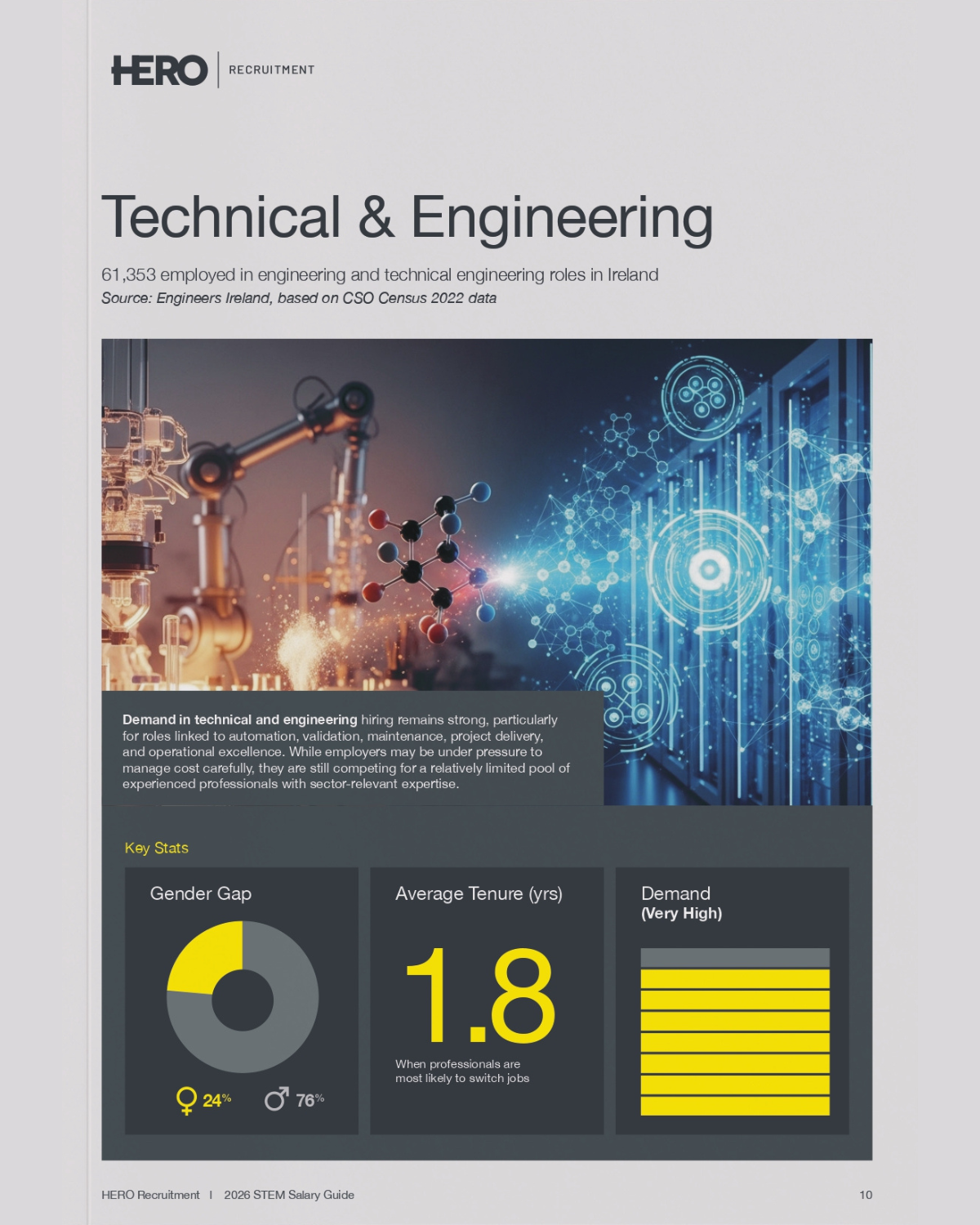
HERO’s 2026 Engineering Salary Guide benchmarks permanent Project Engineer salaries at approximately €40,000–€50,000 in the lower experience band, €50,000-€65,000 in the intermediate band and €65,000–€75,000 for more experienced professionals. Senior project-management and leadership salaries can vary considerably depending on the assignment and organisation.
A role offering stronger project ownership may be more valuable to your long-term career than a small short-term salary increase.
The Less Glamorous Side: Disillusion and Realities
It is important to go into project management with open eyes.
- You will be less hands-on technically and spend more time in meetings and planning tools
- You sit between senior management and the team, often absorbing pressure from both sides
- You will sometimes be blamed for issues that are not fully in your control
- You will deal with conflict, late tasks, shifting priorities, and stakeholder frustration
If you enjoy problem-solving, collaboration, and guiding people through complexity, this can still be highly rewarding. But it is a different type of satisfaction from designing a system yourself.
Concrete Actions You Can Take This Month
To keep it practical, here is a simple roadmap.
This week
- Tell your manager you are interested in project management
- Volunteer to coordinate a small piece of work or an improvement task
This month
- Enrol in a short project management or Lean course
- Start using simple PM tools: timeline, action tracker, risk log
- Ask a project manager or project engineer in your company for a 30-minute coffee chat about their career path
Next 3-6 months
- Lead a small project end-to-end (scope, plan, execute, report)
- Capture results: timelines, savings, quality improvements
- Update your CV and LinkedIn to highlight planning, coordination, and stakeholder work, not just technical tasks
You are not abandoning engineering. You are scaling it through people, decisions, and delivery.
If you are ready to explore project management job in Ireland’s STEM sector or want tailored career advice, you can contact Regina Carroll, Principal Recruitment Consultant at HERO Recruitment, at jobs@hero.ie or 086 0100903.
FAQs



Search Jobs
Match my CV
We take the hard work out of finding you a new job. Simply upload your CV (or call us) and we’ll get hunting for you!
Subscribe to The Shift for the latest STEM industry and career updates.

Join The Shift!
Get insider updates on the hottest industry trends, cutting-edge career advice, and exclusive talent insights. Stay ahead of the curve and keep your finger on the pulse of Ireland’s STEM talent trends. Exciting content coming your way soon!